
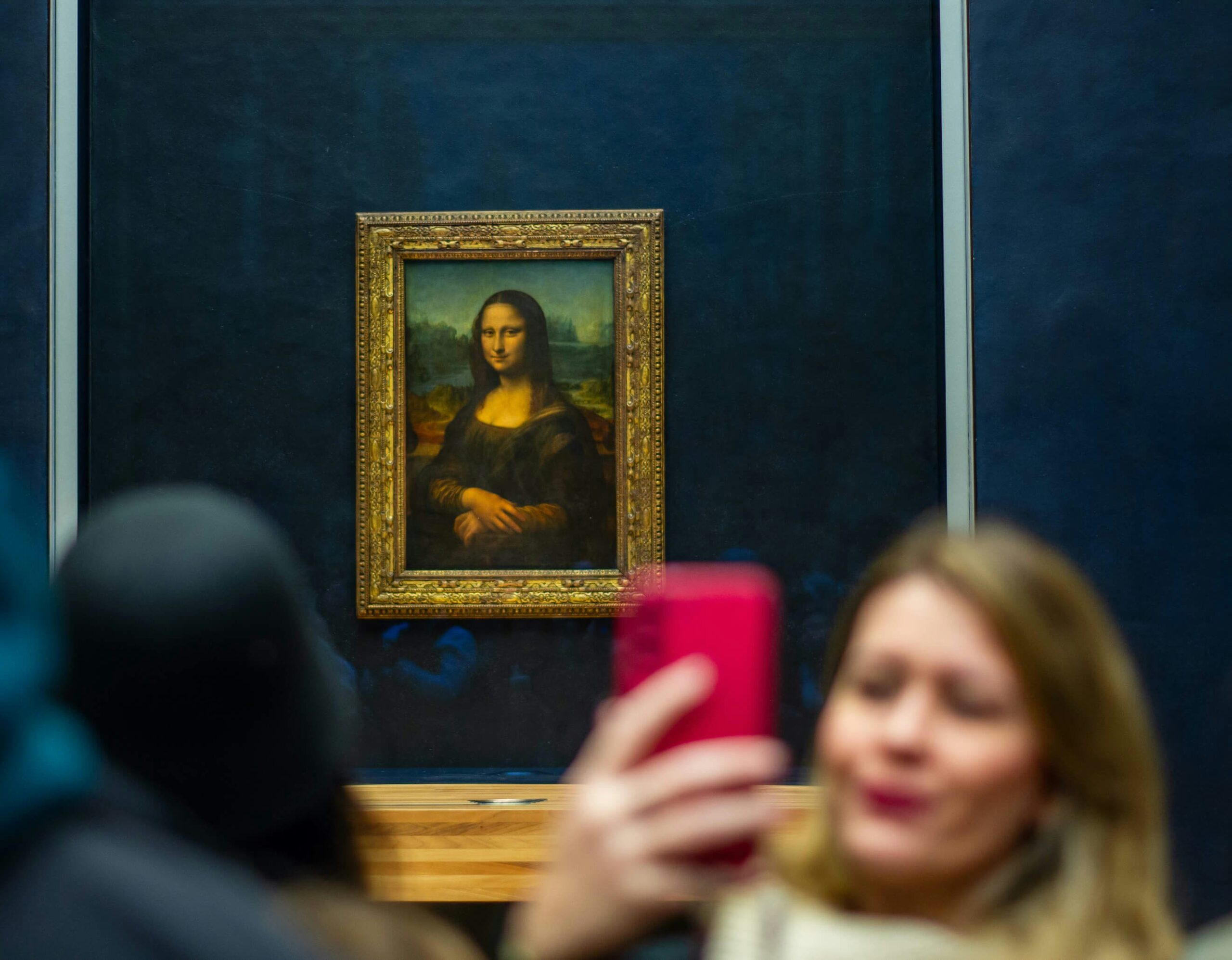
When we talk about “Masterpieces: The Most Famous Art in History,” we’re essentially looking at works that have resonated deeply across cultures and generations, shaping our understanding of art itself. These aren’t just pretty pictures; they’re pieces that have sparked conversation, challenged norms, and stood the test of time, often for a combination of their technical brilliance, innovative ideas, and sheer emotional impact.
Stepping back in time, some of the earliest forms of human expression laid the groundwork for what we now understand as art. These aren’t always in museums but are integral to art history.
Cave Paintings: Echoes of the Past
Long before structured societies, humans were leaving their mark. The cave paintings in places like Lascaux, France, and Altamira, Spain, dating back tens of thousands of years, are prime examples. These aren’t just doodles; they show a sophisticated understanding of form, movement, and even perspective. They often depict animals, hunting scenes, and abstract symbols, and their purpose is still debated – perhaps ritualistic, storytelling, or simply a way to record their world.
The sheer age of these works and the conditions under which they were created make them remarkable. Artists used natural pigments like ochre and charcoal, sometimes mixed with animal fat, applied with fingers, brushes made from hair or moss, or even by blowing pigment through hollow bones. Their survival over millennia is a testament to the stability of their environments and the enduring power of human creativity. These early efforts demonstrate an innate human drive to create and communicate visually, a foundational element of all art that followed.
The Great Pyramids: Monumental Achievements
While often seen as architectural marvels, the Great Pyramids of Giza, particularly the Pyramid of Khufu, are also works of art in their scale, precision, and symbolic significance. Built around 2560 BC, they were tombs for pharaohs, designed to usher them into the afterlife. Their exact construction methods still puzzle engineers today, but the sheer effort and organization involved speak volumes about the capabilities of ancient Egyptian civilization.
The pyramids weren’t just mounds of stone; they were part of larger complexes that included temples, smaller tombs, and causeways, all intricately planned and executed. The alignment of the pyramids with celestial bodies, the precise cutting and fitting of massive stone blocks, and the intricate symbolism embedded in their design elevate them beyond mere construction. They represent a culture’s profound belief system and its capacity for monumental artistic expression on a landscape scale.
Renaissance Masterpieces: Rebirth of Perspective
The Renaissance marked a huge shift in European art, moving from the more symbolic styles of the Middle Ages to a renewed interest in realism, humanism, and classical ideals.
Leonardo da Vinci: The Polymath’s Brush
Leonardo da Vinci, active in the late 15th and early 16th centuries, was a true polymath, and his artistic output reflects his insatiable curiosity. His most famous work, the Mona Lisa, housed in the Louvre Museum, is perhaps the most recognizable painting in the world. Its fame comes not just from her enigmatic smile, which seems to change depending on how you look at it, but also from Da Vinci’s revolutionary use of sfumato, a painting technique that blurs edges and colors to create a soft, hazy effect, giving the illusion of depth and life.
But Da Vinci’s contributions didn’t stop there. His Last Supper, a mural in Milan, cleverly uses linear perspective to draw the viewer’s eye to Christ, while also capturing the individual reactions of the disciples to the revelation of betrayal. This work, despite its ongoing conservation challenges due to the experimental fresco technique Da Vinci used, remains a powerful narrative and compositional triumph. These paintings exemplify the Renaissance spirit of humanism, focusing on individual emotion and psychological depth.
Michelangelo: Sculpting the Divine
Michelangelo Buonarroti, a contemporary of Da Vinci, dominated the High Renaissance with his powerful sculptures and frescoes. His David, carved from a single block of marble between 1501 and 1504, is a masterpiece of anatomical precision and emotional intensity. Unlike earlier depictions, Michelangelo shows David before his fight with Goliath, tense and focused, embodying heroic potential. Its scale and the intricate detail of the musculature and expression captivated audiences then and now. The choice of marble, a material that allows for incredible detail and luminosity, further enhances the sculpture’s impact.
Equally monumental is the ceiling of the Sistine Chapel in the Vatican, painted between 1508 and 1512. This vast fresco cycle, depicting scenes from Genesis, including the iconic Creation of Adam, showcases Michelangelo’s extraordinary ability to render the human form in countless dynamic poses. The scale of the project, executed while lying on his back on scaffolding, and the intricate theological narrative, made it an unprecedented artistic feat, demonstrating his mastery of color, composition, and human anatomy.
Breaking Conventions: Art of the 19th and Early 20th Centuries

The 19th and early 20th centuries saw artists pushing boundaries, challenging established academic traditions, and exploring new ways of seeing and representing the world.
Impressionism: Capturing Fleeting Moments
Before Impressionism, painting often focused on precise detail and historical narratives. But a group of French artists in the late 19th century, dissatisfied with the rigid Salon system, started painting what they saw rather than what they thought they should see. They were interested in light, color, and how these changed over time. Claude Monet is arguably the most famous among them, with his series of Water Lilies paintings being iconic. These weren’t intended to be exact reproductions of nature but rather impressions of it.
Monet’s Impression, Sunrise, which actually gave the movement its name, perfectly captures this spirit. It’s not about precise forms but the play of light on water and the atmosphere of the moment. Other Impressionists like Pierre-Auguste Renoir focused on vibrant social scenes, while Edgar Degas explored the world of ballet and laundresses, all with a similar emphasis on capturing the fleeting visual experience. Their use of visible brushstrokes and bold colors contrasted sharply with academic painting, paving the way for further artistic experimentation.
Vincent van Gogh: The Intensity of Expression
Vincent van Gogh, a Dutch post-impressionist painter, achieved little recognition during his lifetime but is now celebrated for his emotionally charged and distinctive style. His works are characterized by thick, impasto brushstrokes and vibrant, often contrasting colors, reflecting his intense inner world. The Starry Night, painted in 1889 while he was in an asylum, is a prime example. The swirling cypress tree, the fiery stars, and the glowing moon create a sense of movement and spiritual intensity that transcends a mere landscape.
Van Gogh’s ability to imbue everyday objects and scenes with profound emotion is what makes his work so powerful. His series of Sunflowers paintings, for example, are not just botanical studies but expressions of optimism, gratitude, and sometimes desperation. His letters to his brother Theo offer a profound insight into his artistic struggles and philosophies, further enhancing our understanding of his groundbreaking approach. His art is a testament to the power of individual expression and how art can be a window into the soul.
Modern and Contemporary Art: Redefining Art

The 20th century was a period of rapid change, and art mirrored this by constantly questioning its own nature and purpose.
Pablo Picasso: Cubism and Beyond
Pablo Picasso was one of the most influential artists of the 20th century, constantly reinventing his style. He co-founded Cubism, a revolutionary movement that broke away from traditional perspective and representation. Les Demoiselles d’Avignon, painted in 1907, is considered a pivotal work, depicting five nude female prostitutes with fractured, angular bodies and mask-like faces, reflecting African and Iberian influences. It was shocking at the time but fundamentally altered the course of modern art.
Cubism dismantled the idea of a single viewpoint, instead showing multiple perspectives simultaneously. Later, Picasso’s Guernica, a monochromatic mural painted in 1937, became a powerful anti-war statement, depicting the bombing of a Basque town during the Spanish Civil War. Its distorted figures and stark imagery convey the horror and suffering of conflict, demonstrating how art can serve as a profound political and emotional commentary. Picasso’s prolific output and constant experimentation solidify his place as a titan of modern art.
Andy Warhol: Pop Art and Mass Culture
Andy Warhol challenged traditional notions of art by embracing commercial imagery and mass production in the 1960s with his Pop Art movement. He took everyday objects and popular culture icons and elevated them to the status of fine art. His Campbell’s Soup Cans series, for instance, are not about the artistic merit of a soup can itself, but rather about consumerism, repetition, and the mechanization of art. By replicating these familiar images using silkscreen printing, he blurred the lines between high art and low culture.
Warhol’s portraits, such as his vivid depictions of Marilyn Monroe, again utilize silkscreen to create multiple, slightly varied images. These works comment on celebrity, branding, and the manufactured nature of fame. He questioned the very definition of uniqueness in art, suggesting that mass-produced images could be just as meaningful, if not more so, in a consumer-driven society. Warhol’s influence continues to resonate, as artists today still grapple with themes of mass media, branding, and the digital age. His work undeniably paved the way for new discourses around authenticity and commercialism in art.
The Endurance of Art: Why Masterpieces Matter
| Artwork | Artist | Year | Location |
|---|---|---|---|
| Mona Lisa | Leonardo da Vinci | 1503–1506 | Louvre Museum, Paris |
| The Starry Night | Vincent van Gogh | 1889 | Museum of Modern Art, New York |
| The Last Supper | Leonardo da Vinci | 1495–1498 | Santa Maria delle Grazie, Milan |
| The Scream | Edvard Munch | 1893 | National Gallery, Oslo |
The works discussed here, and countless others, aren’t just historical footnotes. They continue to captivate, challenge, and inspire. They often tell stories, reflect cultural values, or push the boundaries of technical skill and conceptual thought.
Cultural Significance and Historical Context
Many masterpieces are deeply intertwined with their cultural and historical contexts. They can act as visual archives, offering insights into the beliefs, social structures, and events of their time. The pyramids reveal ancient Egyptian funerary practices and hierarchical societies, while Da Vinci’s works reflect the humanist shift of the Renaissance. Picasso’s Guernica directly responds to a twentieth-century conflict, making it a powerful historical document as well as an artwork. Understanding this context enriches our appreciation and understanding of the piece, allowing us to see it not just as an aesthetic object but as a window into a past world. Without understanding the societal norms or philosophical currents at play, much of an artwork’s depth can be lost. It’s a reminder that art isn’t created in a vacuum, but is a product of its environment, influencing and being influenced in turn.
Artistic Innovation and Technical Skill
Beyond their narratives, many masterpieces are celebrated for their groundbreaking artistic innovations and sheer technical brilliance. Whether it’s the mastery of perspective during the Renaissance, the revolutionary use of light and color by the Impressionists, or the deconstruction of form in Cubism, these artists pushed the craft forward. Michelangelo’s ability to coax such emotion and detail from marble, or Da Vinci’s subtle sfumato contribute significantly to their enduring fame. These techniques weren’t just decorative; they allowed artists to express ideas and feelings in ways that hadn’t been possible before, opening up new avenues for artistic exploration. The sustained power of a masterpiece often lies in how it transcends mere craft to achieve something truly visionary, demonstrating a level of skill and conceptual foresight that still impresses centuries later.
The journey through these masterpieces isn’t just a tour of museums; it’s a look at how humans have continuously sought to understand, represent, and question their world through visual means. Each work, in its own way, contributes to the rich, ongoing conversation that we call art history. They remain relevant because the human experiences they touch upon – beauty, conflict, belief, identity – are timeless.